Thanks for the visit

JOIN US FOR "SONG WRITERS GROUP" IT'S FREE!

We accept:  


HOME

2013 CALENDAR

2012 CALENDAR

2011CALENDAR

TALENT EVENTS

FEED BACK

ABOUT US

IN THE STUDIO

SERVICES

CLIENTS

STAFF

CONTACT US

TV COMMERCIALS

CLASSES


CURRENT EVENTS

2013 Round 3 VAP Talent Search at Stars & Strikes in Dacula, GA - Click here for Details Friday Nights April 12, 19, 26, May 3- Finals 10th, 2013
Sign up at 7P.M. - Free Event-

DACULA
2013 Season 2 VAP Talent Search at Stars & Strikes in Stone Mountain GA - Click here for Details Sat. Nights April 13, 20, 27, May 4- Finals 11th, 2013
Sign up at 7P.M. - Free Event-
Home
STONE MOUNTAIN
Attention: MAY'S MEETING WILL BE MOVED TO JUNE 2
Join us for the last Sunday of each month for: Song Writers Group in the studio.

Musicians & Song Writers would meet and help each other with Songs ideas, Lyrics & Music Ideas.
Click for more info...  - FREE ---

NEWS

NEWS! Project518 New Progressive Jazz CD Project is HERE! Featuring the Smooth Sax Sounds of Eric Baker  & the Driving Riffs on Guitar of Ronnie Winstead. Twelve Instrumental Songs that will Rock You & Calm You all in one CD. Get yours now at: www.project518.net
NOTE: Click on the Brackets in the bottom right corner of video to enlarge.


Visit our new Blog Page www.blogvap.com VAPBlog
If you are an artist & trying to sell and or follow your music; you might want to read this information! See the article at the bottom of this page.

2013 Class Dates & Times

Basic Song Writing Class
June 8, 2013, 10A.M. to 1:00P.M.
at Virtual Adrenaline Production Recording Studio. This is a 3 hour class with 3 break-out sessions teaching song structure, working with others, how to write a song even if you don't play an instrument and by the end of the class you will have written a song!
Press Kit Class
June 1, 2013 Time: 10:00 A.M. to 11:30A.M.
Click for Details Learn what you need to have when booking your gigs, getting your music heard, CD presentation & More!
Stage Presence 101 Class - TBA -Time: 3P.M. to 5P.M. Click for Details Learn how to perform on stage, not just singing for your audiences. How to connect with them, how to move to the lyrics that you are presenting.
Introduction to Vocal Training, Group Vocal Class, Teacher: Dr. Lisa Guzzardi Click for Details & scroll down the page: Basics What to do & not to do before you sing, Scales & Much More...Dates will be posted soon.

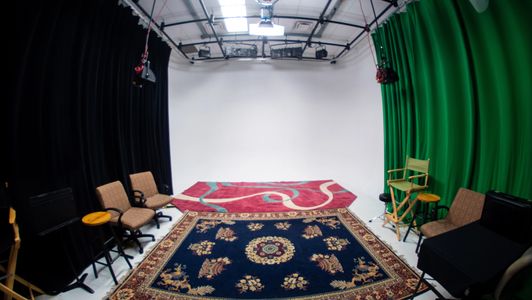
Come and join us for 1 hour FREE Beginner Guitar Lessons every 1st & 3rd Monday of the Month at Virtual Adrenaline Production Recording Studio from 7:30pm to 8:30pm in the Video Production Room -Click here for Map & Directions Click on "Detail Hall Map" to see how to get to the studio or use Entry 3 and give us a call and we will send someone to show you back. (We are in a private area of the mall, not in the retail area.)
 
OTHER
Like us on Facebook:  http://www.facebook.com/VirtualAdrenaline  
COMING SOON!
You will be able to buy original songs from our artists on our site! (Purchase, Download & Enjoy)
Click on this link to see some of our past contestants at the VAP Talent Search
We are looking for more Interns- to help us in the studio and outside events. Call us or send an e-mail: info@virtualadrenaline.com 404-558-6918
Visit our YouTube Channel Here
http://www.youtube.com/user/VAPRecordingStudio
Ronnie Winstead in on the board. Click to see what's going on -http://www.gmia.org/ .
See my CD's on CD Baby Get yours today! Thanks Ronnie Winstead, Eric Baker & Project518
http://www.cdbaby.com/Search/Um9ubmllIHdpbnN0ZWFk/0
See our TV Ads Here. These are artists that have been featured in 2 of our commercials that ran on 5 Cable Networks http://youtu.be/fbI9H7vFgnc
http://youtu.be/EfMK6SDiz2A
 
We Need Your Help
We are currently looking for someone to help to communicate and help with our events. If you or you know someone that would be will to help us please ask them to call us: 404-558-6918 or send us an e-mail to: info@virtualadrenaline.com This person will help set up events and work with our artist to provide opportunities for them to perform & help promote Virtual Adrenaline.

We were the Title Sponsors of the 2012 Lilburn Idol. Click Here for Dates, Click Here for Lilburn Web Site

Let's Pay Music Artists Less -The Fight for Internet Radio Fairness Ain't Done Yet
 

Late last year, at the urging of Pandora radio and other tech industry players, Congressman Jason Chaffetz (R-Utah) and Jared Polis (D-Colo.) co-sponsored the Internet Radio Fairness Act (IRFA). The bill got such a late start that it failed to make it out of committee during the 2012 Congressional year. It also fared poorly at a Congressional hearing in late November 2012, but sources such as Billboard warn that the bill isn’t dead so much as “hibernating.”

As proposed, this legislation would have lowered the amount of music artist royalties that Internet radio and music streaming services such as Pandora and I Heart Radio currently pay to copyright owners of the songs and sound recordings that form the basis for their businesses. According to Pandora and other Internet radio providers, the current royalty rates make their business models unprofitable.
 

Expanding the market by reducing music artists’ royalties?
In a nutshell, Pandora and their coalition of Internet radio supporters argue that artists will ultimately benefit by allowing reduced Internet radio royalties, since this will allow Internet radio companies to become profitable and continue to build the audience for music that often cannot get airtime on terrestrial radio. While there is no denying the Internet has done a lot to level the playing field for indie artists, Pandora is a publicly traded company with more than 100 million registered users. In November 2012, Pandora cited data that it accounted for 7% of all US radio listening, with 62.4 million active listeners that month. It has also just launched the service in Australia and New Zealand. Should artists and labels take a hit on their royalty rates to help Pandora continue to grow in size and profitability?

According to CNET’s Greg Sandoval, that’s exactly the pitch Pandora co-founder Tim Westergren used to make the case for the IFRA. Sandoval stated, “[Westergren’s] argument to the music industry boiled down to this: we need to slash the money we pay you in order to help you.” Sandoval’s point emphasizes that while Pandora is an effective platform to encourage music discovery for consumers and lesser known bands, just being “discovered” doesn’t pay the bills for a struggling artist. Payments for streaming or downloading their music will help pay the bills.

At the November 28, 2012 hearings, Pandora CEO Joe Kennedy lobbied Congressional Representatives stating that Internet radio providers should be paying the same compulsory rates that cable and satellite radio networks receive (more on that below). On its FAQ page encouraging support for the IRFA, Pandora cites that “satellite pays about 7.5% of revenues and cable about 15%, while Pandora pays more than 50% in royalties.” Arguing its case based on revenues is clearly self-serving, however, as the business models are totally different.

XM/Sirius radio and cable require a monthly subscription payment before listeners can access any music, while Pandora operates on a “freemium” model, meaning that there is no monthly subscription fee for its basic service (ads are inserted into the music streams). Pandora’s no-cost model has been the key driver of its dramatic growth – which is why a percent-to-revenue comparison is inherently biased.

Appearing in opposition to the IRFA before the November 28, 2012 hearing, the National Music Publishers Association invited a few songwriter members, including Desmond Child and Linda Perry, to each perform one of their songs in the halls of Congress. Perry performed her song, “Beautiful,” a mega-hit for Christina Aguilera, which she explained was streamed 12.7 million times on Pandora in the first quarter of 2012. These listens amounted to only $349 in songwriter royalties. Child led an impromptu sing along of his hit “Livin’ on a Prayer,” which he co-wrote for Bon Jovi.

Producer Jimmy Jam testified, arguing that the majority of musicians are not millionaires, but middle class artists struggling to make ends meet. “Their talent is necessary to make the industry work,” explained Jam. “An artist gets 70¢ for a download, but only a tenth of a penny for a Pandora stream – that’s why the Internet royalty is so high.” Jam was joined by Sound Exchange president Michael Huppe, who explained that, “a Pandora listener who spends 250 hours with the service costs Pandora only $4 in royalties, and now Pandora wants to lower it further. What would a willing buyer pay a willing seller for this?” Huppe’s point reflects the attitude of many performers and labels that the Internet radio royalty rates are already quite low, unless you compare them to terrestrial radio’s totally free ride when it comes to performance royalties.

As the different sides argued their points in the hearing, it became clear that the artistic community, backed by their own informal coalition of songwriters, music publishers, record labels, and the Recording Academy, viewed the terms of the IRFA as clearly anti-artist. Some of the Congressmen also noted that the bill, as proposed, would likely reduce the earnings received by an artist from roughly $4 per listener to 70¢. In fact, Rep. John Conyers (D-Mich.) chided proponents of the bill stating, “A more appropriate title for the bill might be the paycheck reduction act, because what it would do is lower the royalties that Internet radio pays by more than 85%.”
 

The elephant in the room – terrestrial radio’s “free ride”
Sandoval reported that a few of the Representatives “began asking why Internet radio and satellite radio must pay but traditional radio does not. They questioned why Congress was looking at a little piece of the problem, Internet radio, when terrestrial radio broadcasters, a much larger group, had been allowed for decades to generate profits from music without paying any compensation.”

If there is any added benefit to performers and labels that may come as a result of the IRFA debate, it’s that the elephant in the room, the fact that terrestrial radio has had to pay nothing for 80 years to build its profitable business model, may once again be under the spotlight of Congress, as well as the music and tech industries.

Terrestrial radio broadcasters, the AM or FM stations that you listen to as you drive around town, were granted the right to use sound recordings back in the 1940s without paying labels or performers. To be clear, in the 1940s, copyright did not yet exist in sound recordings, only in songs. Terrestrial radio broadcasters do, however, pay songwriters through ASCAP, BMI or SESAC, but when a radio station plays a Foo Fighters song, while the writers receive a payment from that terrestrial broadcaster, neither the performer nor his or her label receive a cent for the broadcast of that recorded performance.

Cable radio and XM/Sirius satellite radio pay both songwriters and sound recording copyright owners through Sound Exchange, at rates agreed to some years back when Congress added royalty provisions for digital streams. Adding insult to injury for performers and record labels is the fact that the USA is the only industrialized country that does not require terrestrial radio stations to pay both songwriters and performers a separate royalty for use of their music. Often referred to as a radio performance royalty, this issue has been a subject of debate on and off over the last five years in Congress, but a powerful terrestrial radio lobby, led by the National Association of Broadcasters, has been able to blunt the efforts of performers and the recording industry to overturn this long-standing convention. (For a quick review on copyright and music licensing, check out Copyright Basics: Exclusive rights, licensing lingo, and more.)

Other industrialized nations all pay a radio performance royalty, but no US artists are paid one in those foreign territories, since foreign artists do not earn any performance royalty in the US. This international convention is referred to as reciprocity. So for instance, when a song by Adele is played on a US terrestrial radio station, neither Adele nor her label receives a US radio performance royalty. Likewise, when a Frank Ocean song is played in the UK, neither Ocean nor his label receive a UK performance royalty, even though UK radio stations pay these to all non-US artists. As you can see, the radio performance royalty on its own is a major headache for performers and labels trying to make a living in today’s music world.

If all these facts have your head is spinning a bit, don’t despair. Both the music and tech industry’s intense interest and lobbying for how royalties are calculated and paid point to the fact that music is continuing to play an important role in the new millennium, and will continue to be a driver of both technology and hopefully, copyright revision. It is also likely that the main points of the IFRA will reappear in the new 113th Congressional schedule for further debate.
 

Where do we go from here? 
Rumors are currently circulating that the Internet Radio Fairness Coalition will regroup shortly and reintroduce the key tenets of the IRFA, most likely under a new name, since the old name is now viewed as having lost credibility with a number of elected representatives and suffering a bit of a PR black eye. Billboard’s Glenn Peoples, who follows digital media, wrote on January 3, 2013 “IRFA is dead for now, but it was really killed by the calendar. IRFA was unlikely to be passed before the 113th Congress was sworn in today. Instead, it sets up a political fight that is likely to last for years.”

Pandora is not flying solo in its efforts to change its royalty obligations. Juggernaut Clear Channel Radio, the Consumer Electronics Association, the Digital Music Association (DiMA) and a number of other smaller organizations are part of the Internet Radio Fairness Coalition, the group trying to lower the costs to use music for all Internet radio businesses. The LA Times reported that Pandora’s Kennedy was joined in support of the bill before Congress by Venrock Investments Partner David Pakman (founder of early Internet music company, eMusic). Pakman stated that his investment firm was staying away from Internet radio because “the current licensing regime – virtually prevents success.” Hubbard Radio CEO Bruce Reese agreed telling the Congressional committee, “The Internet provides an opportunity to expand, but streaming is impeded by high, unaffordable royalty rates. There simply is not enough revenue to cover costs.”

If you are a songwriter, recording artist, indie label owner or music lover who believes that artists should be paid for creating and sharing music, keeping an eye on the battle of both Internet radio royalties and the bigger issue of the performance royalty exemption for terrestrial radio should be added to your New Year’s watch list. Ultimately, being able to make a middle class living as a musician and artist will be affected by these decisions made by elected officials in our nation’s capitol.

Music isn’t declining in popularity anywhere in the world, but it is going to take informed and articulate musicians and music managers to advocate for fair compensation for artists, labels, songwriters and the rest of the creative team that makes the music we all value.

 
Call us at 404-558-6918 with any questions or if you would like to perform or send an e-mail to: info@virtualadrenaline.com

Click here to see a map

WE ARE LOCATED INSIDE SUGARLOAF MALL (FKA: DISCOVER MILLS MALL)

We accept: